Article
How Construction Speed Became a Geopolitical Weapon in the AI Era

Scroll

Noa Catharina
July 13, 2026
Overview
The AI race is being fought in code and financed in billions. But its outcome may be decided somewhere far less glamorous: in the three year gap between ordering a transformer and turning on GPUs. Whoever closes that gap will decide where intelligence is built, and who controls it.
I have spent years now standing in half-built data halls, the kind with exposed conduit and a site manager apologizing for the dust, and I can tell you the AI story everyone wants to write is the wrong one. Everyone wants this to be about algorithms. It is not. Walk the floor of any active build and the thing staring back at you is concrete, a generator pad, and a slab of empty ground where the transformer is supposed to sit, because it was ordered two years ago and still hasn't shown up. Software people do not have to live with that. The rest of us do.
Jensen Huang put it best at the Center for Strategic and International Studies last year. "If you want to build a data center here in the United States, from breaking ground to standing up an AI supercomputer is probably about three years. They can build a hospital in a weekend." He meant China. Three years gets you a grid connection negotiated, permitting cleared, a foundation poured, power and cooling systems built to a density nobody was designing for five years ago, and months of commissioning before a single GPU is allowed to draw a watt. Demand does not make any of that go faster.
The hardware sitting at the end of that three year process will be meaningfully outdated in about eighteen months. Design something today on the assumption that you will be using it in 2029, and you have already built yourself a generation and a half behind schedule
The Revenue Clock
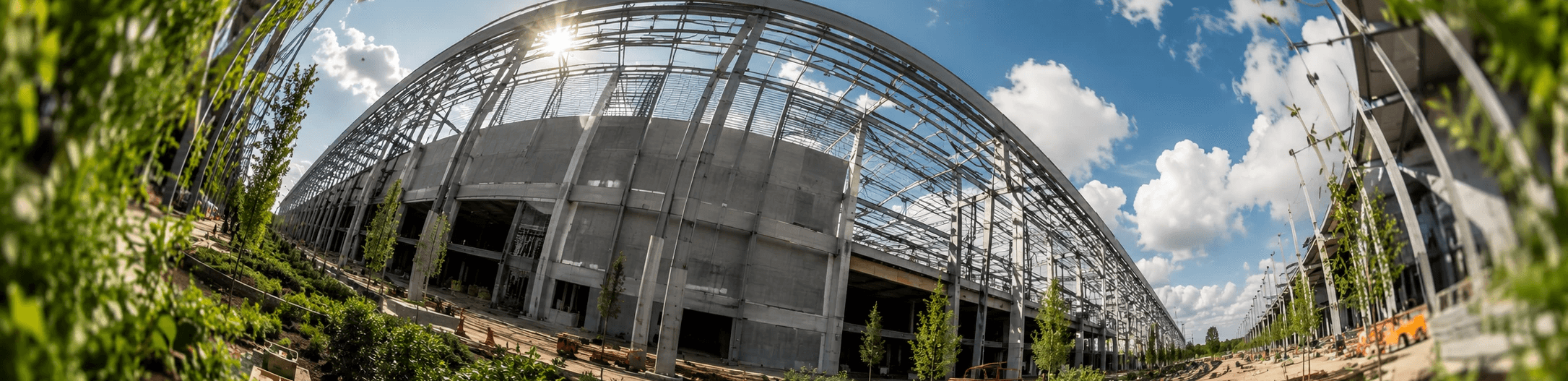
A GPU starts earning money the day it gets turned on, not the day someone signs the purchase order. That gap is going to matter a lot over the next two years: the U.S. is on track to deploy 8.1 million GPUs between 2025 and 2027, with the number climbing fast each year. Whoever gets theirs running first gets paid first, keeps getting paid, and locks in customers who will still be there when the next generation of hardware arrives, while everyone behind them is still pouring concrete.
For every month a 60 megawatt facility sits incomplete, the developer loses roughly $14.2 million in lease revenue and carrying costs. The U.S. currently has approximately 7 gigawatts of data center capacity facing material delays.
The Land Was Never the Point
If energization is the whole game, the real prize was never the land. It was whatever guarantees the power shows up on time, and right now that guarantee is a transformer order, not a deed. A hyperscaler can sit on a parcel in Texas for two years with no permit filed and no crew on site, and the position holds anyway, because what actually reserved that spot was a transformer ordered years before anyone broke ground. Everyone arriving second is negotiating for whatever power is left over. Substation lead times have stretched past 160 weeks, up from roughly 24 to 30 months before 2020, and the industry has adjusted the only way it can: by buying power, land, and substation capacity 24 to 36 months ahead of construction, before the rest of the market even knows the site exists.
But buying ahead only works if there is something left to buy, and that is where the real fight is happening. Transformers, switchgear, cooling skids, the steel and copper underneath all of it: every hyperscaler is bidding against the same finite production capacity, and a purchase order just gets you a place in that line. The ones actually pulling ahead are not waiting for that timeline. They are buying into the supply chain itself, securing capacity at the source rather than competing for what is left of it once everyone else has already ordered.
A hospital does not get built in a weekend because the labor is faster. It gets built in a weekend because the power, the land, and the materials were already decided years earlier, so by the time the order comes down, there is nothing left to negotiate. China runs that same logic at the scale of a national grid, deciding power, land, manufacturing capacity, and permitting all at once, sized to a province instead of a parcel. Jared Cohen, President of Global Affairs at Goldman Sachs, named the consequence directly: "The data center buildout puts geography at the center of technological progress and competition." A hyperscaler fights for a parcel in Texas. A ministry decides a province in China. It is the same fight, just measured in different units.
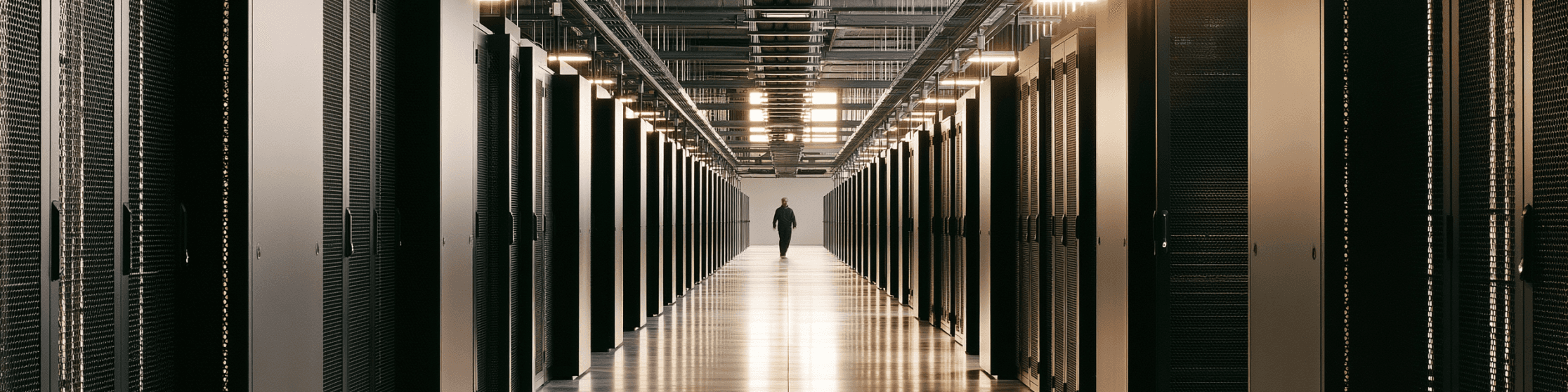
The same fight is already happening between a neocloud and the hyperscaler trying to out-bid it for the same substation slot, and it is happening, more slowly and more expensively, in Europe, where decades of treating scarcity as a design discipline produced some of the most efficient grids on earth and none of the surplus gigawatts this race actually requires. Speed itself, regardless of who achieves it or how, is now the actual currency of the AI race, and the operators, companies, and countries who treat it as a software problem are going to lose to the ones who treat it as the industrial problem it actually is.
A faster building does not fix any of this. Most of the industry still finds the land, then fights for the power, then starts building, in that order, and no amount of factory efficiency rescues a project stuck at step two. The only real fix is starting all three at once, so the power is ready the same week the building is.
The Industry Calls It Modular. It Should Be Calling It Inevitable.
The industry keeps quoting Huang's three years like it is a fact of nature. It is not. It is the price of building every data center as its own bespoke project, designed from a blank page, on a site nobody has built on before, by a crew that has never built this exact thing. That approach made sense when a data center was just a building you put computers in. It does not make sense now that a data center is closer to a power plant, a piece of national infrastructure, the kind of asset that determines whether a region can even compete in the defining industry of the next decade.
Nvidia has spent two years calling these buildings AI factories. The metaphor is doing more work than anyone in marketing probably intended, because it sets a standard the buildings themselves have not yet met. A factory replicates. Most of what gets called an AI factory today is still a one-off, designed from scratch on the same site it will be poured on, which makes the word a promise the industry has not actually kept.
Some companies are still shipping the old idea: a container with a server rack bolted inside, fine for an edge site nobody will ever walk past, and a reasonable answer to a narrow problem. It is not what the future of this industry looks like, because it is ugly, and no hyperscaler wants something that looks like a shipping crate sitting in its backyard with its name on it. The next generation looks nothing like that. Factory-engineered to the same Tier III and Tier IV standards as a bespoke build, the same density, the same redundancy, and an architectural finish indistinguishable from anything poured on site, because the people building them have realized nobody needs to know which walls arrived on a truck. What you get is the speed of a factory and a building that looks like it was designed to be looked at, which is the part of this story the engineering has already solved and the market has not yet noticed.
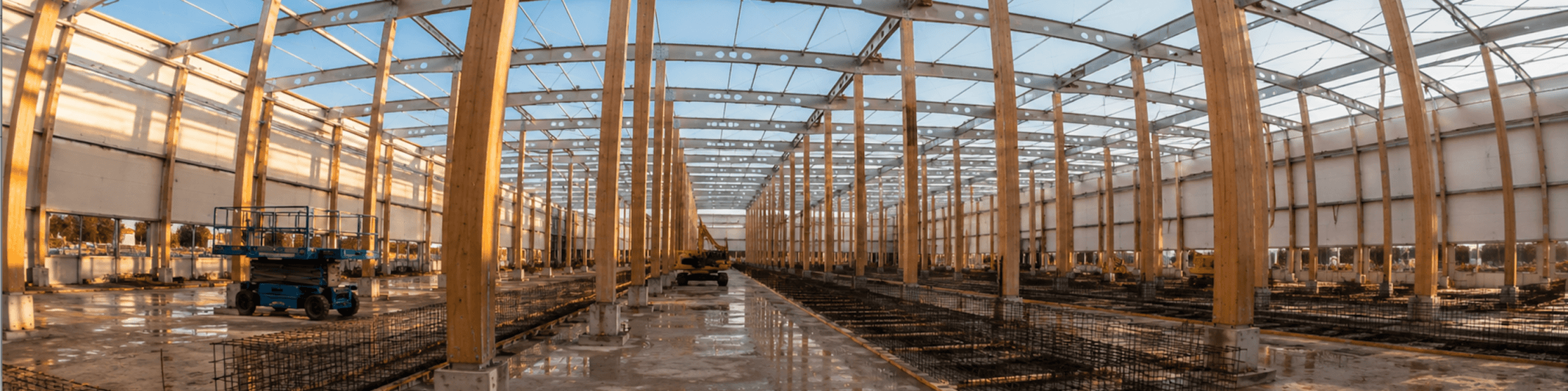
It is also the part that should make a lender's or an LP's ears prick up, because none of this stays inside the construction trade. Every month shaved off a build schedule pulls the facility's revenue forward in the cash flow model, and in project finance, where lenders are underwriting against future income rather than collateral, a shorter time to first dollar shows up directly in the IRR. Energize 8 months sooner and the loan starts paying itself back 8 months sooner, and the equity check starts compounding 8 months sooner alongside it. Building this way is, among everything else, a financing advantage wearing a hard hat, and it is strange that the industry still talks about it as an engineering choice when half its real value shows up on a term sheet.
Not every factory-built system earns that comparison. The ones that do let an operator add capacity in increments and swap in new hardware without tearing the building apart, instead of locking an entire campus into assumptions made years before the servers showed up. That is the version worth building, and the one that actually looks like what people picture when they hear the word factory, not a row of beige boxes but something engineered with the same precision and intent as the chips running inside it. A hardware cycle that rewrites itself every eighteen months was never going to be served by a faster version of the old approach. It needed a different one entirely.
Less Waste, Not Just Less Time
No greenwashing required this time, big tech. Off-site, factory-manufactured components run at roughly 1.8 percent material waste. Pour and frame the same structure conventionally on site, and waste climbs closer to 30 percent. The materials carry the savings, not just the walls: prefabricated power skids, factory-poured structural elements, pre-engineered steel assemblies, all measured cutting embodied carbon by more than half against an equivalent built-from-scratch facility. It is what happens automatically when the pieces of a building are engineered once with precision and shipped to site, instead of improvised a hundred times on a hundred different lots, and it deserves to be said out loud rather than treated as a side benefit nobody bothered to calculate.
A factory that can ship a finished power skid in six months is useless if the grid connection for it is still five years out, and a fast grid connection is wasted on a site that takes three years to build. The two supply chains, the one that delivers power and the one that delivers the building, have to move on the same timeline or neither speed advantage means anything. Done badly, factory construction does not eliminate complexity, it just relocates it from the site to the factory floor, and the operators chasing speed without the rigor on both fronts will simply manufacture their problems faster than they used to build them.
None of this guarantees anyone wins the larger argument about how AI gets built or governed. Model quality, safety choices, and who customers trust will still decide most of that. But none of it happens at all without compute, and the operator who gets theirs online first gets to be in the room a generation earlier than the one still waiting on a transformer.
The Race Is Physical
The Jensens and Sams and Satyas of the world all want the same thing Huang was pointing at in the first place: compute online as fast as possible. Nobody in that group disagrees on the goal. Where it gets interesting is the method. The $500 billion committed to Stargate and the hundreds of hyperscale facilities moving through global planning pipelines prove the urgency is real. Whether the construction model underneath all that capital can actually deliver on those timelines is the question nobody on a keynote stage wants to answer first.
Delayed infrastructure means delayed capability. That is the whole equation construction speed runs on.
Anthropic already shows what taking this seriously looks like: roughly $9 billion in annualized revenue at the end of last year, more than $30 billion now, achieved while locking down 3.5 gigawatts of next-generation compute years before most of it comes online. That is not hedging. That is a company that already ran the numbers in this article.
Something has to give, and whoever makes it give first will not say so from a keynote stage. They will just be the ones already running while everyone else is still talking. What is at stake is not abstract. It is control over the largest, fastest compute base on the planet, and with it, outsized influence over how AI gets built, governed, and deployed everywhere else, which is as close to a definition of geopolitical power as this decade is going to produce. That control will not go to whoever spends the most or talks about ambition the loudest. It will go to whoever stops treating power and construction as two separate problems and finally treats them as the one industrial challenge they have always been. The race is still open. The answer is being decided in concrete, not in code.
Noa Catharina is an infrastructure strategist focused on AI data center construction, energy procurement, and the supply chains that determine how fast compute actually gets built. She works directly on data center deployment and writes about compute governance, digital sovereignty, and the physical constraints shaping the next decade of AI infrastructure.
Sources
BloombergNEF: AI Data Center Build Advances at Full Speed · Bloomberg: China Starts Prefabricated Power Hub for Data Centers, CCTV Says · Goldman Sachs: Data Center Power Demand, The 6 Ps · Goldman Sachs: How AI Is Transforming Data Centers and Ramping Up Power Demand · JLL: Data Centers Close 2025 With Record Demand · Visual Capitalist: The Shortage of U.S. Data Center Capacity (2023–2028P) · Data Center Knowledge: AI-First Hyperscalers, 2026's Sprint Meets the Power Bottleneck · Data Center Knowledge: Did Hyperscalers Solve the Power Problem in 2025 — or Rethink It? · DIGITIMES Asia: China Launches Prefabricated Power Hub to Speed Data Centers, Cut Costs · Modular Building Institute: Why Modular Data Centers Are Gaining Momentum · Vertiv: How Steel-Frame Modular Construction Cuts Data Center Embodied Carbon by More Than Half · ERM: Circular Building & Construction Supply Chains for Data Centers · SitusAMC: Data Centers in an AI-Driven Era — Key Trends Reshaping Valuation · Global Data Center Hub: Grid Interconnection Delays Repricing Europe's Data Center Market · VentureBeat: Anthropic Says It Hit a $30 Billion Revenue Run Rate After 'Crazy' 80x Growth · Grand View Research: Modular Data Center Market Size & Share Report, 2030 · IEA: Energy and AI · CSIS: NVIDIA's Jensen Huang on Securing American Leadership on AI · Fortune: Nvidia CEO Says Data Centers Take About 3 Years to Construct in the U.S., While in China 'They Can Build a Hospital in a Weekend' · Landgate: The New Prize in the Data Center Race Isn't Land. It's Land Next to Power · Tom's Hardware: Half of Planned US Data Center Builds Have Been Delayed or Canceled · Data Center Knowledge: Why AI Data Center Projects Face Years of Delays After Approval · BIS Research: Data Center GPUs Market Report